

“Edip Watch Your Waist!” My pant, which was hung on the fridge by my Dietitian wife on 5 April 2011.
Nine Points of My life
Edip Yuksel
www.19.org
Though I am an ordinary man, the events in my life have been extraordinary. My life’s story is rich with internal and external conflicts, relentless quest for truth, courage, intellectual honesty, sacrifice, and dedication to promote peace, freedom, social democracy, and rationalism. My life story may provide a unique and precious insight how to approach the so-called “clash of civilization.” I am the child of that clash! I have a mirror in my hand for the Crusader and the Jihadi, for the West and East. I do not claim to have panacea for the problems of the world, but I have a perspective on some theo-political issues that worthy of consideration.
Here are some of the aspects of my life-story.
Time Travel and Naked Reality
This Documentary is NOT Funny!
Edip Yuksel
9 Nov. 2012
www.19.org
I met myself and my family in a different time zone, in stone age. I had a time travel. The documentary, written, produced and directed by Jean-Pierre Dutilleux, film is one of the most inspirational films I have ever watched. It made me cry from the beginning to the end.
In awe and with deeper appreciation of our basic and common nature; our conflicting tendencies; our strength and weaknesses, our fears and aspirations; our dogmas and curiosity, our kindness and cruelty, our love and hatred, our myths and reality…
This monumental and historic encounter which is fittingly described as “Isolated tribe man meets modern tribe man for the first time” is eye-opening, especially about the world we have created. Tough it has been criticized for not been exactly the authentic first encounter it does not change the realism of the encounter. It opens a window of self-evaluation from the jungle about the benefits and harms of the modern technology that both serves us and enslaves us, that gives us joy and pain that feeds us and destroys us, that cures us and poisons us; together with the little planet we share.
This is about the incredible lessons we learn by meeting other cultures in peace and trying to learn from each other, rather than fighting and dominating each other. Throughout watching this documentary, I remembered the Quranic verse 49:13 and I got deeper appreciation of its message. Even though divided by thousands of years in terms of culture, knowledge and technology, we are so much alike.
49:13 “O people, We created you from a male and female, and We made you into nations and tribes, that you may know one another. Surely, the most honorable among you in the sight of God is the most righteous. God is Knowledgeable, Ever-aware.”
Just watch the mother feeding her baby, the father struggling to find food for his family. Just look in the eye of the caveman and see the entire humanity. It is time to learn to extend our right hand to others. Enough of being manipulated by warmongers among us. Let’s not let our plastic toys and gadgets, our monstrous weapons and arrogance, our intoxicated politicians and clergymen alienate us from the naked reality: we are all children of Adam and we must spend more effort to promote peace, love and care on this shrinking planet.
PS: Out there is a rumor claiming the docu-film to be “fake.” But after reading them, I find their claims to be hyperbole if not completely false. Even if it is a fiction, it is one of the most realistic fictions with super-talented actors.

The Jinni and You: Who is serving who?
Edip Yuksel
10 November 2012
www.19.org
Of course, there are plenty of benefits in high technology, especially the “phone” that serves as a camera, music player, internet portal, television, voice recorder, secretary, computer, GPS device etc. For instance, through social media we can find like-minded people from around the world, which could help us affirm our bigotry or allow us to exchange ideas and learn from others. It helps to find locations in big cities. Call friends or police for help when we are in need. It allows people to vent their frustrations against governments or institutions… The list is long.
But, the price of Aladdin’s Lamb that fits in our pocket might be bigger than its benefits. The jinni is not always benevolent. We are polluting the environment from the birth and death of each device and the mass destruction of each model declared “old” by companies whose entire goal is to tell us how bad is the gadget we just got a few months ago and sell us a newer gadget. We become perpetually unsatisfied consumers consumed by greed to get newer toys over and over. We are like children addicted with newer toys, and ready to replace a perfectly functioning phone at the drop of a commercial. Instead of talking to the person sitting next to us or our neighbor we are texting or sharing our private information with strangers, perhaps a troll we would never consider as a friend in real life.
We tag each other’s’ names on pictures and do the work for FBI, CIA and all other alphabet-soup secret agencies that do very dirty works. We are manipulated by governments, the rich and powerful through social media. We spend precious time and effort debating social and political issues with others via social media, without knowing that some of them are bots or trained propaganda agents by governments and cancerous organizations. We are distracted during work and even in classrooms. I have to repeatedly warn some of my distracted and fragmented students not to be tempted to check their phone during the classroom.
The list of benefits of carrying all those gadgets in one’s pocket is long, but the list of harms might be longer. So, do not fall in love with the jinni in your pocket. Use it carefully, and less. Watch people around you in malls and trains: they ears are plugged, their eyes are fixated, their fingers are tickled… Then look at ourselves. We are swallowed by corporate black holes. We are swallowed into a parallel universe dominated by plutocracy or global oligarchy: Facebook, Google, and similar mass-spying and manipulation programs. We need to start unplugging and get to know our neighbors and help each other.

The Meaning of Life
1999
1998 Yahya, Matine, Edip and Pizza
FURKAN: Let’s begin with the most significant question of existence. What is the meaning of life? And related to this question, what should the purpose of living be?
EDIP: The meaning of limited human life is zero since a century is zero compared to infinity. Death is inevitable. Even if we could copy our minds (falsely known as metaphysical souls), that is our genetic code, with all the idiosyncratic neural connections of our brains (memories) through digital transformation, and could download it to a googel shmoogel byte-size hard disk, still it would be zero since all scientific evidences indicate an end to the universe. However, if there is an eternal Creator who possesses the master record of every conscious being, then the meaning of this life becomes infinitely important.
I will refrain from prescribing people their purpose of living. But if you wonder my purpose in life, I would say: submit myself to the Creator of Singularity like every atom and subatomic particle in the universe. We all came from singularity 10 or 15 billions years ago with a Big Bang and we will all turn back to the same singularity with a Big Collapse.
FURKAN: According to your observations, why do people live?
EDIP: Most people live without thinking about their spatial (not special!) and temporal position in the physical universe. Most people continue imitating their parents and neighbors without questioning their culture, religion, tradition, etc. Most people live just to live while every second after their conception is a race towards the end of their lives. Trying to satisfy their unsatisfying animalistic desires, majority of human population does not find peace of mind to reflect beyond their tiny world.
19
FURKAN: Let’s turn to the subject of 19. Can you mention briefly the theory of 19?
EDIP: All units, that is, letters, words, sentences and chapters of the Quran are mathematically designed on a prime number which was prophesied in a Chapter called “The Hidden One” for more than 14 centuries. The simple to understand but impossible to imitate mathematical harmony, in my opinion, is beyond human capacity to construct. Integration of arbitrary human language with the precise and universal rules of mathematics in the Quran and in the original Bible is a marvel that can be appreciated only by those who study it with critical and truth-seeking mind. The examples of this mathematical design are demonstrated in several books, including my Turkish book “Uzerinde 19 Var” (published by Milliyet Yayinlari) and its forthcoming English version “Code 19”.
FURKAN: Why do you think most people ignore or disagree with this thesis?
EDIP: Because most people follow religious or anti-religious ideas with their hormones, rather than their intellect.
FURKAN: Contrary to traditional acceptance of the Islamic world, you concluded that two parts that are regarded as verses at the end of Surat al-Tawba do not actually belong to the Quran. I wonder what you experienced psychologically in the process of this important decision.
EDIP: In addition to the mathematical evidence indicating that those two “verses” do not belong to the mathematically designed book (Kitabul Marqum), God blessed me with a personal experience that made me certain about my decision. I begged my Creator for a sign to save me from confusion and guide me the truth. My sincere and persistent search for truth was responded by my Lord. He fulfilled his promise of 41:53 by supporting my faith through BOTH objective and subjective evidences. I believe that every person who seeks the truth and is ready to acknowledge it regardless the cost of such an admission, that person will witness objective and subjective divine signs.
FURKAN: After you came to the conclusion that 9:128-129 are not from God, what were your environment’s reactions to the decision?
EDIP: It was not a surprise. I expected excommunication, loss of family connection, popularity, job (best-selling author), political future and friends, threat and even death. All happened except for the last one. Thank God, for each loss God blessed me with better ones.
Turkey vs. US
FURKAN: What about your impressions of Turkey and the United States of America? When you compare Turkey with the US, what do you want to say about the similarities and differences between living in Turkey and living in the US?
EDIP: This question begs a lengthy answer. In short, the most important difference is that individual freedom and creativity is respected and encouraged in the US. In Turkey, individual freedom and creativity is suppressed to protect religious and political dogmas and a corrupt system alive. In brief, the panacea of many problems that have plagued Turkey and other so-called Muslim countries is observance of the Article 19 of the Universal Declaration of Human Rights.
Daily Life
FURKAN: Finally, would you like to give some information about your daily life? How do you spend your time? What do you do during weekdays and at weekends?
EDIP: Here is my winter schedule, in brief.
Wake up for morning prayer. Breakfast with my family. Leave home at 7:30 for the full time legal job. Return home around 5:30. Watch the news. Observe evening prayer with the family. Eat dinner with the family. Spend some time with my two sons, Yahya (9 years old) and Matine (5 years old). (You can see their pictures on my web site, www.yuksel.org). Put them in bed around 8:30 pm Afterwards, either read a book/magazine or watch an informational TV program with my wife for half or an hour. Go on Internet and answer the e-mails. Go to bed around 12 pm.
Tuesday and Thursday evenings I teach a philosophy class at the local college, from 7 pm to 8:15 pm. Soon I am expected to allocate one or two hours of evenings to teach logical reasoning section of LSAT (Law School Assessment Test) on Internet. Then, I have to reduce my time on answering e-mails.
Saturday and Sundays I spend time with my family. Once a while we all go bicycling. Sometimes we play soccer on the grass of the nearby park. We rarely go skating. In summer, both Yahya and Matine are on soccer teams (Yahya’s team’s name was Blue Galaxies, Matine’s was Bumble Bees!); taking them to training and matches keeps us pretty busy. Some nights or weekends, I try to write articles and finish books. Once a month we go to theaters, museums, art exhibitions, fairs, etc. Several days ago we participated in an activity in Yahya’s school. Yahya played violin and sang songs in the chorus. Tonight we were invited to two parties. One was casual and Western, the other was an art exhibit. Occasionally, we go to homeless shelters to cook and serve food to the needy. Once every five or six months we go for several days of trip to California. Last summer we visited Grand Canyon. Once every two or three years I go to Turkey. My wife prefers her home country, Iran.
Friday noon we meet with a small group of believers in a house and pray the congregation prayer. Leading the prayer is by turn. When their turn comes every participant, including women, gives a short speech and leads the Friday prayer. Sunday evenings we usually participate in Quranic studies. Again, with active participation of every person.
FURKAN: Thank you very much for this interview.
EDIP: Thank you.
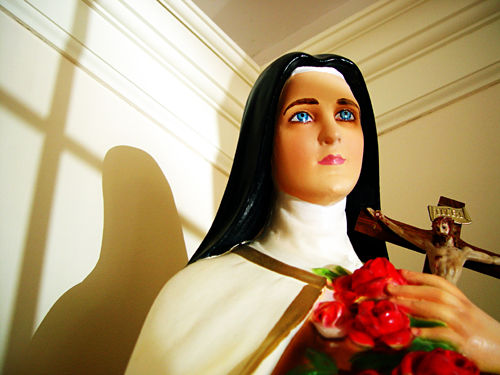
Your Prayers are Accepted
One of the many idols fabricated by Catholic Church
FROM: M.M.Farhat
TO: Birjis Alam
CC: Cecil, Don W, David S, Hakam Q, Farouk A, Edip Yuksel, Daniel D
DATE: Fri, Oct 12, 2012 at 12:48 PM
SUBJECT: St. Theresa Prayer
FROM: Birjis Alam
TO: Yasmin Moghul
CC: …
DATE: 12 October 2012 06:13
SUBJECT: Re: Fw: St. Theresa Prayer
FROM: Yasmin Moghul
TO: Birjis Alam
CC: …
DATE: Fri, Oct 12, 2012 at 2:37 AM
SUBJECT: FW: St. Theresa Prayer
FROM: Jessica Dubash
TO: Yasmin Moghul
CC: …
DATE: Tuesday, October 9, 2012, 9:37 AM
SUBJECT: FW: St. Theresa Prayer
FROM: Yazdyar Haveliwala
TO: Jessica Dubash
CC: …
DATE: Mon, 8 Oct 2012 06:46:12 +0000
SUBJECT: RE: St. Theresa Prayer
This will show you how powerful prayer is !
Look at the picture, read the prayer and then make a wish and read the prayer again.
<image001.jpg>
I am picking people who have touched my life and who I think would want to receive this. Please send it back to me (You’ll see why). In case you are not aware, Saint Theresa is known as the Saint of the Little Ways, meaning she believed in doing the little things in life well and with great love…
She is represented by roses.
May everyone who receives this message be blessed.
Saint Theresa’s Prayer Cannot be deleted.
REMEMBER to make a wish before you read the prayer. That’s all you have to do.
There is nothing attached. Just share this with people and see what happens on the fourth day. Sorry you have to forward the message, but try not to break this, please..
Prayer is one of the best free gifts we receive… Read the prayer below.
Saint Theresa’s Prayer
May today there be peace within.
May you trust God that you are exactly where you are meant to be.
May you not forget the infinite possibilities that are born of faith.
May you use those gifts that you have received, and pass on the love that has been given to you.
May you be content knowing you are a child of God.
Let this presence settle into your bones, and allow your soul the freedom to sing,
Dance, praise and love.
It is there for each and every one of us.
Now, send this to 11 people within the next 5 minutes .
This angel is sent to you..
<image002.gif>
You must send her to 11 people including me.
In 8 minutes you will receive something you have long awaited.
Have faith.
GOD BLESS YOU.
FROM: Edip Yuksel edipyuksel@gmail.com
TO: Mac Farhat
CC: Birjis Alam, Yasmin Moghul, Jessica Dubash, Yezdyar Haveliwala
DATE: Sun, Oct 14, 2012 at 11:39 PM
SUBJECT: Your prayers are accepted (Re: St. Theresa Prayer)
Dear faithful people, Mac Farhat, Birjis Alam, Yasmin Moghul, Jessica Dubash, and Yezdyar Haveliwala.
I received St. Theresa’s Prayer through all of your faithful work… As you know, what goes around comes around. Your hard work has paid off!
My prayers were answered:
In my dream, I was told by an angel that all of you are pure 100% organic idiots, and that God does not like idiots.
I have a medicine for your problem, but ı am not sure whether you can administer it without help. Good luck. Here is the first pill:
Before putting anything in our mouths we observe the color, sniff its smell. If it looks rotten, or smells bad we do not touch it. If a food passes the eye and nose tests, then our taste buds will be the judge. If a harmful bit fools all those examinations, our stomach come to rescue, it revolts and throws them up. There are many other organs that function as stations for testing, examination, and modification of imported material into our bodies. They ultimately meet our smart and vigilant nano-guards: white cells. Sure, there are many harmful or potentially harmful foods that pass all the way through our digestive system into our blood, such as alcohol and fat.
Nevertheless, without much using our reasoning faculty, we have an innate system that protects our body from harmful substances. Then, it is a mystery how we put information and assertions, especially the most bizarre ones, into our brains without subjecting them to rigorous test of critical thinking.
We should not turn our brains into trashcans of false ideas, holy viruses, unexamined dogmas and superstitions, which usually use Trojan Horses to invade and conquer our castle, which is brain! We should be wise!
(For the second pill, read the following)
http://19.org/380/the-holy-viruses/
Peace,
Edip
****
****
FROM: M.M.Farhat
TO: ‘Edip Yuksel’; Farouk Aziz
CC: Birjis Alam; Ymoghul, Yazdyar
DATE: 15 October 2012
SUBJECT: Your prayers are accepted (Re: St. Theresa Prayer)
Mr Yuksel
Thank you for granting me an award of being idiot. I attended 2 days conference in Oxford University organised by Arnold Mol & you 2 years ago and you put me in doubt of your abysmal moral integrity being a disciple of imposter prophet late Rashid Khalifah, a proponent of Theory of 19. However, now you have shown your real colours that your are on top of the most prominent idiots in the world. I am informing your right hand man and my good friend for the last 12 + years Farouk Aziz from Malaysia as well.
My last request is: Please remove my name from your mailing list
Because a so called sensible man should not waste his time in sending trash to idiots
M. Farhat
***
FROM: M.M.Farhat
TO: Sh Aziz
CC: Arnold Mol, Iftikhar, Imran
DATE: 16 October 2012
SUBJECT: Re: Your prayers are accepted (Re: St. Theresa Prayer)
Dear Sh Aziz. Arnold Mol, Iftikhar & Imran
Salam-o-Alaikum
To understand the bottom of the whole story you scroll down to the bottom and start reading from there.
In a nutshell my sister-in-law forwarded St Theresa Prayers to me to forward to at least 7 persons which I did including Edip Yuksel. No one replied except this man
This is for your information. You can write by all means to him.
Maqbool Farhat
Ilford
NB: Dear Aziz sahib I cannot find Imran Goondiwala address in my address book. Will you please forward it to him
***
Forwarded to Edip Yuksel by M.M. Farhat
FROM: Arnold Yasin Mol
TO: M.M.Farhat
CC: Aziz Shaikh; Iftikhar Ahmad
DATE: 16 October 2012
SUBJECT: Re: Your prayers are accepted (Re: St. Theresa Prayer)
Yep, that’s Edip. Too rude.
Met vredige groeten/With peace/asSalam alaykum,
Arnold Yasin Mol
**
FROM: Edip Yuksel
TO: Arnold Mol
CC: M.M.Farhat, Iftikhar Ahmad
DATE: 1 November 2012
SUBJECT: Re: Your prayers are accepted (Re: St. Theresa Prayer)
Dear Arnold, I prefer to tell the truth rather than avoid being perceived as a rude person, by nice people like you, at the cost of hiding the truth. If I see ketchup on my friend’s nose, I will tell him/her that. I consider it as my duty as a friend. I have the same duty to a stranger who consults me or walking towards a cliff.
This matter is much worse than a gram of ketchup on the nose; it is the venomous spider of organized religions that has caused numerous tragedies and atrocities in human history.
The truth is not always popular, my dear friend (See: 23:70-71)… I could join the bandwagon and try to please those who keep forwarding this so-called prayer in the name of ST. THERESA, which CONTAINS:
Thus, I did not join the bandwagon, since It CONTRADICTS:
The prayer cleverly propagates authority of the polytheistic, corrupt, and hypocritical teachings of the Catholic Church. The Quran, the proven word of God contains many prayers and I can directly pray to God without looking the picture of a fabricated saint by Catholic Church to fool and control the “faithful”, euphemism for the “gullible” and “idiot”.
By the way: Who is St. Theresa? It is one of the many fictional idols created by Catholic Church. Kellogg’s innovates and market cereals; Ford innovates and markets cars; Apple innovates electronic devises and markets them. Catholic Church innovates and markets lies, holy lies. It is a very productive lie-production machine. The bigger lies, the more excited customers it gets. They have been carving new saint-idols for every profession and segment of their target population. Anyone who knows about marketing and advertising knows that Saints serve to reinforce the brand name. The incredible wealth and power of the Catholic Church, in the past and even in the present is realized EXACTLY through these sorts of “prayer marketing” scams.
So, my dear friends. Sorry for crashing your party with sober words. Go and follow the Catholic Church’s propaganda, and look at the picture of one of the hundreds of their fictional idols and hope that your prayers will be accepted in 8 minutes!
You will be in the company of the millions of delusional and duped people who sing peace in their churches, synagogues or mosques but support warmongers, bigger military and cheer for more bloodshed. Those who can put faith in St. Theresa and the false promises in the name of God, will surely be able to put faith in many other false promises. They will suffer from cognitive dissonance, which is the culprit in the greatest tragedies in human history.
As for those who wish to pray through this or that idol, here is the alphabetic list of the saints fabricated by the Catholic Church. You will get dizzy, which one to choose. I will not say good luck, since I have no doubt that you will regret in the hereafter, if not here.
http://www.catholic.org/saints/
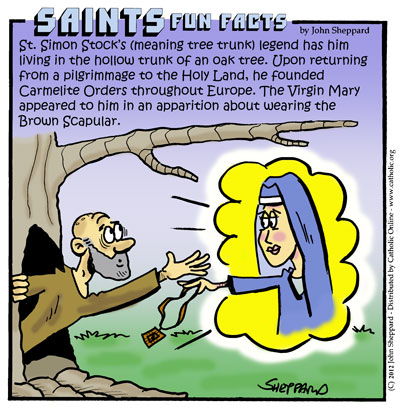
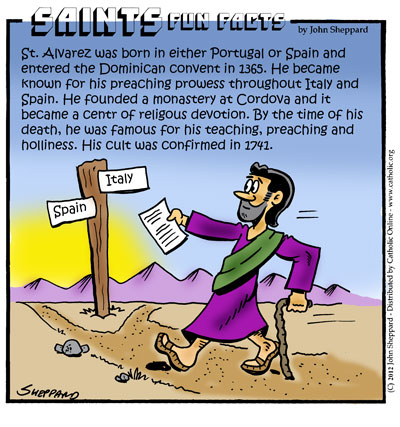
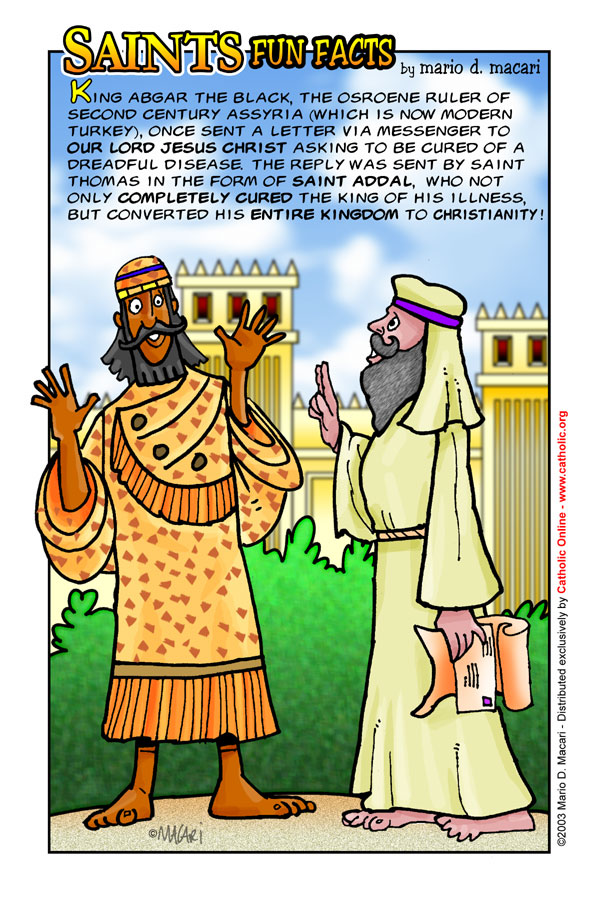
Before you go through the list of saints in the first letter of the alphabet, below a few “facts” about the saints peddled by the Catholic Church alongside St. Theresa. It is from the same site, above in the category of Fun Facts:
http://www.catholic.org/saints/fun_facts_arch.php
 |
 |
 |
 |
And don’t miss this menu at the same site. I removed the hyperlinks, but it should give you some idea about the SAINT INDUSTRY. It is very lucrative. It brings billions of dollars to Catholic Church:
MORE SAINTS
Saints Index
Saints FAQs
Patron Saints
Popular Saints
Church Doctors
Female Saints
Black Saints
Japanese Saints
Irish Saints
Martyr Saints
Saint News
Stigmata
Feast day List
Saint of the Day
Saints Fun Facts
Saint Calendar
California Missions
Angels
Angel Encounters
Search Saints
Here is the list of the 894 “saints” or “idols” whose names start with LETTER A only. They are all TRINITERIAN CATHOLICS. And ALL of them are worshipers of the previous saints. A self-serving industry! The holy perpetual machine!
St. Aaron
St. Abadios
St. Abadir
St. Abadiu
St. Abaidas
St. Abakerazum
St. Abakuh
St. Aba Mina
St. Abamon (Apa Pamun)
St. Abanoub
St. Aba Salamah, (Frumentius)
St. Abba Capito
St. Abba Isa
St. Abba Julian
St. Abban
St. Abban
St. Abban of Murnevin
St. Abbo
St. Abbo
St. Abdas of Susa
St. Abdas
St. Abdiesus
St. Abdon
St. Abel
St. Abercius Marcellus
St. Aberoh (Aburom, Arianus)
St. Abhor (Amba Hor)
St. Abibas
St. Abibas
St. Abibus
St. Abidianus
St. Abigail
St. Abilius
St. Abilius
St. Abilus
St. Abra
St. Abraham
St. Abraham
St. Abraham
St. Abraham
St. Abrahamites Monks
St. Abraham Kidunaja
St. Abraham of Carrhae
St. Abraham of Kratia
St. Abraham of Rostov
St. Abraham of Smolensk
St. Abraham the Poor
St. Abraham the Poor
St. Abran
St. Abreha and Atzbeha (Aizan and Sazana)
St. Absadah
St. Absadi
St. Abudimus
St. Abuna (Frumentius)
St. Frumentius of Ethiopia
St. Abundius
St. Abundius
St. Abundius
St. Abundius
St. Aburom
St. Acacius
St. Acacius
St. Acacius
St. Acca
St. Accidia
St. Acculus
St. Aceolus
St. Acepsimas
St. Acepsimas
St. Acepsius
St. Acestes
St. Acha the Confessor
St. Acharius
St. Achatius
St. Achillas
St. Achillas
St. Achillas
St. Achillas
St. Achillas
St. Achillas of Alexandria
Sts. Nereus & Achilleus
St. Achilleus
St. Achilleus Kewanuka
St. Acirianus
St. Acisclus
St. Acius
St. Acllinus
St. Acrates (Aragawi)
St. Acyndinus
St. Ada
St. Ada
St. Adalar
St. Adalard of Corbie
St. Adalbald of Ostrevant
St. Adalbero
Bl. Adalbero
St. Adalbert
St. Adalbert of Magdeburg
St. Adalbert of Prague
St. Adalgis
St. Adalgis
St. Adalgott
St. Adalsindis
St. Adalsindis
St. Adam
St. Adamnan
St. Adamnan of Coldingham
St. Adauctus
St. Adaucus
St. Addal
St. Adela
St. Adela
St. Adela
St. Adelaide
St. Adelaide
St. Adelaide of Bellich
St. Adelard
St. Adele
St. Adelelmus
St. Adelina
Bl. Adeline
St. Adeloga
St. Adelphius
St. Adelphius the ‘Confessor.’
St. Adelphus
St. Adelphus
St. Adeodatus
St. Adeodatus II
St. Aderald
St. Adheritus
St. Adjutor
St. Adjutor
St. Adolf of Osnabruck
Bl. Adolph Kolping
Sts. Adolphus and John
St. Adolphus Ludigo-Mkasa
St. Ado of Vienne
Bl. Adrian
St. Adrian
Adrian II
St. Adrian III
Adrian IV
Adrian V
St. Adrian
St. Adrian
St. Adrian
St. Adrian, Abbot
Bl. Adrian Fortescue
St. Adrian III
Adrianus
St. Adrian Van Hilvarenbeek
St. Adrio
St. Adulf
Sts. Adulph and John
St. Adventor
St. Aedesius
St. Aedesius
St. Aedh MacBricc
St. Aelred of Rievaulx
St. Aemilianus (Emilian)
St. Aengus
St. Aetherius
St. Afan
St. Afra
St. Afra
St. Africanus
St. Africus
St. Agabius
St. Agabus
St. Aganus
St. Agape
St. Agape
St. Agapitus
St. Agapitus
St. Agapius
St. Agapius
St. Agapius
St. Agatha
St. Agatha Kwon Chin-i
St. Agatha
St. Agatha Chon Kyonghyob
St. Agatha Kim
St. Agatha Lin
St. Agathangelo Noury
St. Agathangelus
St. Agatha Yi
St. Agatha Yi Kannan
St. Agatha Yi Kyong-i
St. Agatha Yi Sosa
St. Agatho
St. Agatho
St. Agathoclia
St. Agathon
St. Agathopus
St. Agathus
St. Ageranus
St. Agericus
St. Agia
St. Agia
St. Agilbert
St. Agilberta
St. Agileus
St. Agilulfus
St. Agilus
Bl. Agnello of Pisa
St. Agnellus
St. Agnellus of Pisa
St. Agnes
St. Agnes of Assisi
St. Agnes of Bohemia
St. Agnes De
Bl. Agnes de Jesus Galand
St. Agnes Kim Hyoju
St. Agnes of Assisi
St. Agnes of Bohemia
St. Agnes of Montepulciano
St. Agnes of Poitiers
St. Agnes of Rome
Bl. Agnes Takea
Bl. Agnes Tsao-Kouy
St. Agobard
St. Agofredus
St. Agostina Petrantoni
St. Agostino Roscelli
St. Agrecius
St. Agricola
St. Agricola
St. Agricolus
St. Agrippina
St. Agrippinus
Bl. Agustin Caloca Cortes
St. AIban of Mainz
St. Aibert
St. Aichardus
St. Aidan
St. Aidan of Lindisfarne
St. Aidan of Ferns
St. Aidric
St. Aigulf
St. Aigulf
St. Ailbhe
St. Aileran
St. Aimo
St. Aizan and Sazana (Abreha and Atzbeha)
St. Ajuture
Bl. Alan de la Roche
Bl. Alan de Solminihac
St. Alban
St. Alban Bartholomew Roe
St. Alban of Britain
St. Alberic of Utrecht
St. Alberic of Cîteaux
St. Alberic Crescitelli
Bl. Albert of Bergamo
Bl. Albert of Clatina
St. Albert Chmielowski
St. Albert the Great
St. Albertinus
St. Albert of Jerusalem
St. Albert of Magdeburg
Bl. Alberto Marvelli
Bl. Albert of Bergamo
St. Albert of Cashel
St. Albert of Como
St. Albert of Gambron
St. Albert of Genoa
St. Albert of Jerusalem
St. Albert of Louvain
St. Albert of Montecorvino
St. Albert of Trapani
St. Alberto Hurtado Cruchaga
St. Albina
St. Albinus
St. Albinus
St. Alburga
St. Alcmund
Bl. Alcuin
St. Aldate
St. Aldebrandus
St. Aldegunais
St. Aldemar
St. Aldericus
St. Aldhelm
St. Aldo
St. Aleaunie
St. Alena
St. ALEXANDER
St. Alexander
St. Alexander of Jerusalem
St. Alexander I
St. Alexander
St. Alexander
Alexander II
St. Alexander
St. Alexander
St. Alexander
Alexander III
St. Alexander
St. Alexander
St. Alexander
Alexander IV
St. Alexander
St. Alexander
St. Alexander
St. Alexander
St. Alexander Akimetes
St. Alexander the Bishop
St. Alexander Briant
Sts. Alexander, Heraclins, and Companions
St. Alexander
St. Alexander
St. Alexander of Gaza
St. Alexander of Kemet
St. Alexander
St. Alexander Nevski
St. Alexander of Alexandria
St. Alexander of Comana
St. Alexander of Constantinople
Bl. Alexander of Lugo
Bl. Alexander Rawlins
St. Alexander Sauli
St. Alexander the Soldier
St. Alexander
St. Alexander
St. Alexander
St. Alexander
St. Alexandra and Companions
St. Alexandra
St. Alexandra of Alexandria
Bl. Alexandrina Maria da Costa
St. Alexis
St. Alexis Falconieri
Bl. Alexius Nakamura
St. Alex U Seyong
St. Aleydis
St. Alfanus
Bl. Alfonso Maria Fusco
St. Alfreda
Bl. Alfredo Ildefonso Schuster
St. Alfred the Great
St. Alfrick
St. Alfwold
St. Alice
St. Alipius
Bl. Alix Le Clercq
St. Alkeld
St. Allerius
St. Allucio
St. Almachius
St. Almedh
St. Almirus
St. Almus
St. Alnoth
St. Alodia
Bl. Luigi Variara
Bl. Alojzije Stepinac
St. Alonso Rodriguez
St. Aloysius Gonzaga
St. Alphaeus
St. Alphaeus
St. Alphege
St. Alphege of Canterbury
St. Alphege
St. Alphius
St. Alphonsa
St. Alphonsa of the Immaculate Conception
St. Alphonsus
Bls. Alphonsus Navarette, Ferdinand Ayala, and Leo Tanaca
Bl. Alphonsus de Mena
Bl. Alphonsus de Orozco
Bl. Alphonsus de Vaena
St. Alphonsus Marie Liguori
St. Alphonsus Rodriguez
St. Airick
St. Altfrid
Sts. Altigianus and Hilarinus
St. Altinus
St. Altman
St. Alto
Bl. Alvarez of Corova
St. Alverius
St. Alvitus
St. Alypius
St. Amabilis
St. Amabilis
Bl. Amadeus IX of Savoy
Bl. Amadeus of Lausanne
St. Amadour
St. Amaethlu
St. Amalberga
St. Amalberga
St. Amand
St. Amandus
St. Amantius
St. Amantius of Como
St. Amantius
St. Amarand
St. Amaranthus
St. Amarinus
ST. Amasius
St. Amaswinthus
St. Amata
Bl. Amata
St. Amator
St. Amator
St. Amator
St. Amatus
St. Amatus
St. Amba Agatho the Silent, Abraham
St. Amba Baula the Just (Paul)
St. Amba Betra (Peter)
St. Amba Paphnutius
St. Amba Shenudi
St. Ambrose
St. Ambrose
St. Ambrose of Alexandria
St. Ambrose Aut-pert
St. Ambrose Edward Barlow
Bl. Ambrose Fernandez
St. Ambrose Kibuka
Bl. Ambrosio Francisco Ferro and Companions
St. Ambytianus
St. Amedeus
St. Amelberga
St. Amelberga
St. Amelberga
St. Amicus
St. Amicus
St. Ammon
St. Ammon
Ammon, the Great
St. Ammon
St. Ammon
St. Ammon
St. Ammon and Serapion
St. Ammonaria
St. Ammonas
St. Ammonius
St. Ammonius
St. Amo
St. Amor
St. Amor of Amorbach
St. Amor of Aquitaine
Bls. Amparo Rosat Balasch and Maria del Calvario Romero Clariana
St. Ampelius
St. Ampellius
St. Ampelus
St. Amphianus
St. Amphibalus
St. Amphilocus
St. Amphion
St. Ampliatus
St. Amulwinus
St. Amunia
St. Anacharius
Bl. Anacleto González Flores
St. Anacletus
St. Anacletus II
St. Ananias
St. Ananias II
St. Ananias III
St. Anastasia
St. Anastasia II
St. Anastasia III
St. Anastasia Patricia
St. Anastasia the Patrician
St. Anastasius
St. Anastasius I
St. Anastasius X
St. Anastasius XI
St. Anastasius XII
St. Anastasius XIII
St. Anastasius XIV
St. Anastasius XV
St. Anastasius XVI
St. Anastasius XVII
St. Anastasius XVIII
St. Anastasius XIX
Anastasius II
St. Anastasius XX
St. Anastasius
Anastasius III
Anastasius IV
St. Anastasius V
St. Anastasius VI
St. Anastasius VII
St. Anastasius VIII
St. Anastasius IX
St. Anastasius Cornicularius
St. Anastasius the Fuller
St. Anastasius the Sinaite
St. Anathalon
St. Anatole Kiriggwajjo
St. Anatolia
St. Anatolius
St. Anatolius of Laodicea
St. Anatolius
St. Anatolius
St. Andeolus
St. Andochius
Bl. Andrea Carlo Ferrari
Bl. Andrea Giacinto Longhin
St. Andreas Bauer
St. Andre Bessette
Bl. Andre de Soveral
Bl. Andre Fardeau
Bl. Andrés Solá Molist
St. Andrew
St. Andrew Chong Hwa-Gyong
Bl. Andrew Hibernon
Bl. Andrew of Strumi
Bl. Andrew Segni (of Anagni)
St. Andrew Thong Kim Nguyen
St. Andrew Trong Van Tran
St. Andrew
St. Andrew
St. Andrew
St. Andrew and Companions
St. Andrew Avellino
St. Andrew Bobola
St. Andrew-Chong Kwagyong
St. Andrew Corsini
St. Andrew Dotti
St. Andrew Dung Lac
St. Andrew Dung Lac
Bl. Andrew Ishchak
St. Andrew Kagwa
Sts. Andrew Kim Taegon, Paul Chong Hasang, and Companions
St. Andrew Nam-Thuong
Bl. Andrew Oexner of Riun
St. Andrew of Crete
Bl. Andrew of Phu Yen
Bl. Andrew of Segni
St. Andrew of Trier
Bl. Andrew Sushinda
St. Andrew the Scot
St. Andrew the Tribune
St. Andrew Tien-K’Ing
Bl. Andrew Tokuan
St. Andrew Trong
St. Andrew Wouters
St. Andrew Zorard
St. Andronicus
St. Anectus
St. Angadresma
Bl. Ángel Darío Acosta Zurita
St. Angela of the Cross
St. Angela Merici
Bl. Angela of Foligno
Bl. Angela Salawa
St. Angelelmus
Fra Angelico
St. Angelo
Bl. Angelo Augustine of Florence
Bl. Angelo of Borgo San Sepolcro
Bl. Angelo of Chivasso
Bl. Angelus of Acri
Bl. Angelus Orsucci
St. Angilbert
St. Angilbert
St. Anglinus
St. Angus MacNisse
St. Anianas
St. Anianus
St. Anianus
St. Anicet Adolfo
Bl. Anicet Hryciuk
St. Anicetus
St. Anicetus
St. Aninus
St. Anna the Prophetess
St. Anna Dierk (Maria Adolfina)
St. Anna Kim
St. Anna Nan-Sinn-Cheu
Bl. Anna of the Angels Monteagudo
St. Anna Pak A-gi
Bl. Anna Rosa Gattorno
St. Anna Schaeffer
St. Anna Wang
Sts. Joachim and Anne
Bl. Anne Catherine Emmerick
Bl. Anne of Saint Bartholomew
St. Anne
St. Anne
Bl. Anne-Francoise de Villeneuve
Bl. Anne Hmard
Bl. Anne Jahouvey
St. Anne Line
Bl. Anne Mary Taigi
Bl. Anne Maugrain
St. Annemund
St. Anno
St. Annobert
Bl. Annunciata Cocchetti
St. Ansanus
St. Ansbald
St. Ansbert
St. Ansegisus
St. Anselm
St. Anselm of Lucca
St. Anselm
St. Anselm of Lucca
St. Anselm of Nonantola
Bl. Anselm Polanco Fontecha
St. Ansfrid
St. Ansgar
St. Ansillo
St. Anskar
St. Ansovinus
St. Anstrudis
St. Ansueris
St. Ansuinus
St. Ansurius
St. Anterus
St. Anthelm
St. Anthimus
St. Antholian
St. Anthony
Bl. Anthony Baldinucci
Bl. Anthony of Amandola
Bl. Anthony of Hungary
Bl. Anthony of Stroncone
St. Anthony, Merulus, and John
St. Anthony, Merulus, and John
Bl. Anthony
St. Anthony the Abbot
Bl. Anthony Baldinucci
St. Anthony Dainan
St. Anthony Daniel
St. Anthony Daveluy
Bl. Anthony della Chiesa
St. Anthony Dich Nguyen
Bl. Anthony Fantosat
Bl. Anthony Francisco
Bl. Anthony Gonzales
St. Anthony the Great of Thebes
St. Anthony the Hermit
St. Anthony Ishida
St. Anthony Kauleas
St. Anthony Kim Son-u
Bl. Anthony Kimura
Bl. Anthony Kiun
Bl. Anthony Manzi
St. Anthony Mary Claret
St. Anthony Mary Gianelli
St. Anthony Mary Pucci
St. Anthony Mary Zaccaria
Bl. Anthony Middleton
St. Anthony Nam-Quynh
Bl. Anthony Neyrot
Bl. Anthony of Korea
St. Anthony of Saxony
Bl. Anthony of St. Bonaventure
Bl. Anthony of Tuy
St. Anthony of Padua
St. Anthony Pechersky
St. Anthony Peter Dich
St. Anthony Primaldi
Bl. Anthony Sanga
Bl. Anthony Turner
Bl. Anthony Vom
St. Anthusa
St. Anthusa the Younger
St. Antidius
St. Antilnus
St. Antiochus
St. Antipas
Bl. Antoine Chevrier
Bl. Antoine Fournier
Bl. Antoinette Roussel
Bl. Anton Maria Schwartz
Bl. Antonia Mesina
St. Antonino Fantosati
St. Antoninus
St. Antoninus
St. Antoninus
St. Antoninus of Sorrento
Bl. Antonio de Sant’Anna Galvao
St. Antonio Vieira
Bl. Anton Martin Slomsek
Bl. Anwarite Nangapeta
St. Anysia
St. Anysius
St. Apelles
St. Aphraates
St. Aphrodisius
St. Aphrodisius
St. Apollinaris
St. Apollinaris
St. Apollinaris
St. Apollinaris
St. Apollinaris
St. Apollinaris Franco
St. Apollinaris Sidonius
St. Apollinaris Syncletica
St. Apollo
St. Apollo and Companions
St. Apollonia
St. Apollonius
St. Apollonius
St. Apollonius
St. Apollonius
St. Apollonius the Apologist
St. Aponius
Apostle of the Gentiles
The Apostles
Apostles of England
Apostles of Erin (Ireland)
Apostles of Rome
St. Appian
St. Appian
St. Apronia
St. Apronian
St. Aprus
St. Apuleius
St. Aquila
St. Aquila
St. Aquilina
St. Aquilina
St. Aquilinus
St. Aquilinus
St. Aquilinus
St. Arator
St. Arator
St. Arbogast
St. Arcadius
St. Arcadius
St. Arcadius and Companions
St. Arcangelo Tadini
Bl. Archangela Girlani
St. Archelais and Companions
St. Archelaus
St. Archippus
St. Arcontius
St. Ardalion
St. Ardanus
St. Ardo
St. Arduinus
St. Arduinus
St. Aredius
St. Aresius and Companions
St. Aretas and Companions
St. Arethas and Companions
St. Aretius
St. Argeus
St. Argymirus
St. Ariadne
St. Arialdus
St. Arian and Companions
St. Arigius
St. Arilda
St. Aristarchus
St. Aristides
St. Aristion
St. Aristobulus
St. Ariston and Companions
St. Armagillus
St. Armentarius
St. Armentarius
St. Armogastes and Companions
Bl. Arnaldo Catani
St. Arnold
St. Arnold Jansen
Bl. Arnold Reche
St. Arnulf
St. Arnulf
St. Arnulf
St. Arnulf of Eynesbury
St. Arnulf
St. Arnulf of Soissons
St. Arnulf
St. Arsacius
St. Arsenius
St. Arsenius the Great
St. Artaldus
St. Artaxus
St. Artemas
St. Artemas
Bl. Artemide Zatti
St. Artemius
St. Artemius
St. Artemius
St. Arthelais
St. Arwald
St. Asaph
St. Ascelina
Bl. Ascension of the Heart of Jesus Nicol Goni
St. Asclas
St. Asclepiades
St. Asella
St. Ashley
St. Asicus
St. Aspasius
St. Aspren
St. Asteria
St. Astericus
St. Astericus
St. Astericus and Companions
St. Astericus
St. Astius
St. Athanasia of Aegina
St. Athanasius
St. Athanasius
St. Athanasius
St. Athanasius
St. Athanasius
St. Athanasius
St. Athanasius
St. Athanasius Badzekuketta
St. Athanasius the Athonite
St. Athelm
St. Athenodorus
St. Athenodorus
St. Athenogenes
St. Atilano Cruz Alvarado
St. Attala
St. Attalas
St. Attalia
St. Atticus
St. Atticus of Constantinople
St. Attilanus
St. Atto
St. Atto
St. Atto
St. Attracta
St. Aubin
St. Auctus
St. Augulus
St. Augusta
St. Augustalus
St. Augustine of Canterbury
St. Augustine of Hippo
St. Augustine Huy Viet Phan
St. Augustine Moi
St. Augustine Moi Van Nguyen
St. Augustine of Huy
Bl. Augustine Ota
St. Augustine Pak Chong-won
St. Augustine Tchao
St. Augustine Webster
St. Augustine Yi Chin-gil
St. Augustine Yi Kwang-hon
6 Augustinian Recollect Companions
Bl. Augusto Czartoryski
St. Augusto Andres
St. Augustus
St. Augustus Chapdelaine
St. Augustus Schoffler
St. Aurea
St. Aurea
St. Aurea
St. Aurea
St. Aurea
St. Aurelia of Strasbourg
St. Aurelian of Limoges
St. Aurelian
St. Aurelian
Bl. Aurelio da Vinalesa
Bl. Aurelio Maria
St. Aurelius
St. Aureus
St. Ausonius
St. Auspicius
St. Austell
St. Austindus
St. Austreberta
St. Austregisilus
St. Austremonius
St. Autbert
St. Autbert
St. Autbod (Aubeu)
St. Autbodus
St. Authaire
St. Autonomous
St. Autor
St. Autus
St. Auxanus
St. Auxentius
St. Auxentius of Bithynia
St. Auxibius
St. Ava
St. Aventanus
St. Aventine of Troyes
St. Aventinus of Tours
St. Aventinus of Chartres
Bls. Avertanus and Romaeus
St. Aviates
St. Avitus
St. Avitus
St. Avitus of Vienne
St. Avitus I of Clermont
St. Avitus II of Clermont
St. Aymard
St. Azas and Companions

When Peaceful Monks transform
into Bloody Monsters
Edip Yuksel
3 September 2012
www.19.org
These are monks, who are depicted as the incarnation of peace and love; yet they have recently been massacring Rohingya minority in Myanmar… All dogmas, be it religious or nationalistic, are dangerous for humanity. Dogmas turn individuals into robots. Today’s good robot could easily be transformed into monsters by a push of button.
Dogmatic people are susceptible to be manipulated by their religious or political masters. They mutate, especially when their masters attain great political and financial power, or during the times of social and political crisis. All they need is to push the red buttons of their followers, the dogmatic robots!
After reading the news, you will find a selection of discussion, below.
Buddhists monks rally in support of Myanmar stance on Rohingya Muslims
Sep 2, 2012
In Myanmar, hundreds of Buddhist monks have held a rally in support of their government’s plan to deport the country’s Rohingya Muslim minority.
On Sunday, the crowd in Mandalay held banners in support of the government’s plan to send the minority group away, as a solution to the deadly sectarian violence.
Back in July, Myanmar President Thein Sein said that the “only solution” to the plight of the Rohingya Muslims was to send the nearly-onemillion-strong community to refugee camps run by the UN High Commissioner for Refugees.
“We will send them away if any third country would accept them,” he added. “This is what we are thinking is the solution to the issue.”
Earlier, Sein conceded that politicians, Buddhist monks, and other ethnic figures are stirring up hatred against the Rohingyas.
“Reports say some 650 Rohingyas have been killed in the Rakhine state in the west of the country in recent months. This is while 1,200 others are missing and 80,000 more have been displaced.”
The Buddhist-majority government of Myanmar refuses to recognize Rohingyas and has classified them as illegal migrants, even though the Rohingyas are said to be Muslim descendants of Persian, Turkish, Bengali, and Pathan origin, who migrated to Myanmar as early as the 8th century.
According to reports, thousands of Myanmar’s Rohingya Muslims are living in dire conditions in refugee camps after government forces and Buddhist extremists started burning down their villages on August 10.
The UN human rights authorities blame Myanmar’s security forces for the violence, who are believed to have been targeting the Muslims rather than bringing the ethnic violence to an end in the country. SZH/JR/AZ
http://www.presstv.ir/detail/2012/09/02/259502/myanmar-monks-rally-against-rohingya/
DISCUSSION:
NAIM: True Buddhists do not deliberately cause suffering on any sentient being just like true Muslims. This news, just like the plan of the instigators of this conflict, is itself designed to generate animosity between two VERY similar, almost identical major belief systems, Islam and Buddhism. Notice the all seeing eye of Horus/Lucifer/DEVIL in the logo of this article’s provider, PRESS TV!
EDIP: I know that the original teaching of Islam and Buddhism is PEACEFUL. Yet, dear friend you miss my point. You miss it greatly.
The issue is not the nature of the original message/practice of a particular religion or even its current message/practice. It is about EPISTEMOLOGY.
Even if a group of people follow the message of peace, progress, freedom, equality, justice through INDOCTRINATION AND DOGMATIC MODUS OPERANDI the nature of such a message has little value. Why? Because their vehicle (dogmatism, blind following) may lead them to another station without even a prior notice… It is all up to the captain of the bandwagon or ship. The captain could be Sultan, Caliph, Pope, Ayatullah, Rabi, Priest, Pastor, Mahdi, Dalai Lama, Monk, or any other fabricated religious title. They usually wear different garbs to distinguish them from their flock, their robots; through these silly theatrics and nonsense they manage to fool and impress their mass. Their success is partially due to their brainpolluting of their victims since their baby years. Ironically, they are too usually the victim of this brain-polluting machine.
They may just change their mind for some political or financial gain. We know from history that the drivers of religious bandwagons are usually manipulative and power-hungry hypocrites. They have supported numerous wars and atrocities throughout history, and even now. Go to churches, synagogues and mosques, you will see their support for troops, their warmongering and nationalistic appetite for the blood of “infidels” or “barbarians” or those they have just declared to be “terrorists.”
So, consider someone saying this:
“My great priest/guru/holyman told me that 2×2=4. I believe that to be true, since I trust my priest/guru/holyman “
Or this:
“My great priest/guru/holyman told me that we should love even our enemies. I believe that to be true, since I trust my priest/guru/holyman”
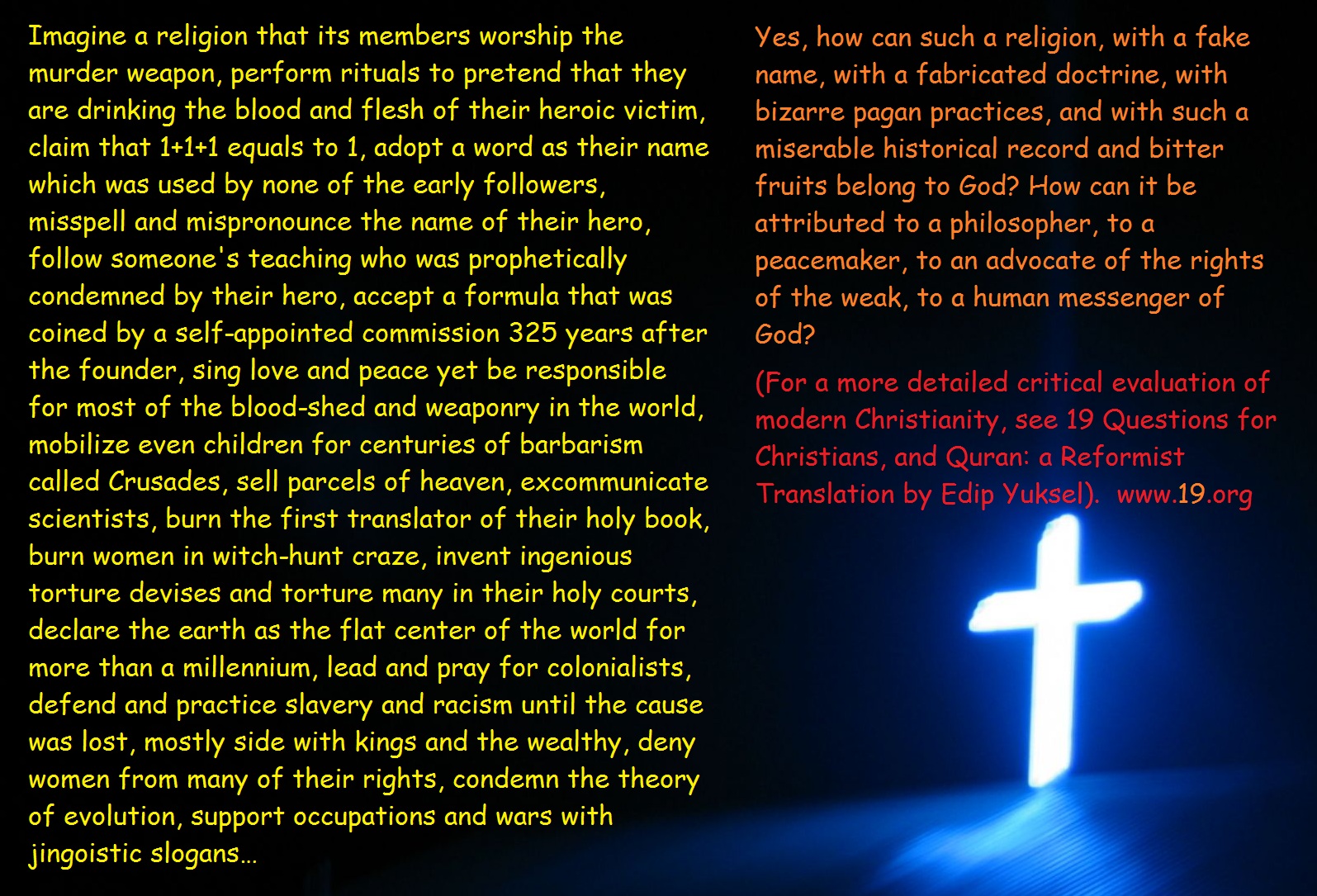
Though what they say is accurate and fine, I do not trust either of them. The first could easily claim 1+1+1=1 (Trinity) when his priest/guru/holyman tells him to do so. The latter could easily commit atrocities, support militaries that invades countries and kills millions of people and torture the captives.
So, the name of the prescribed medicine is:
PHILOSOPHY!
CRITICAL THINKING!
Think on it. Think on it critically!

The Qur’anists
Aisha Y. Musa*
Florida International University
www.19.org
Originally published at Religion Compass 4/1 (2010): 12–21, 10.1111/j.1749-8171.2009.00189.x
Abstract
Stories relating the words and deeds of the Prophet Muhammad, known as Hadith in Arabic, have long been esteemed by the vast majority of Muslims as a source of law and guidance second only to the Qur’an in authority. In recent years, an increasingly vocal Muslim opposition to Hadith insists that the Qur’an alone should be the sole source of religious law and guidance in Islam. Rashad Khalifa, Kassim Ahmad, Edip Yuksel, and Ahmad Subhy Mansour are among the most important rejecters of the Hadith, whose arguments influence a wide variety of groups popularly labeled Ahl al-Qur’an, Qur’niyyun or Qur’anists.
Qur’anists: Contemporary Muslim Opposition
to the Use and Authority of the Hadith
Hadith, stories of the words and deeds of the Prophet Muhammad are the second scrip- tural source of law and guidance after the Qur’an for most Muslims. They are the only vehicle through which, according to the majority of Muslims, we can access what Muhammad said and did and that of which he tacitly approved. These stories have played an important role in shaping the development of Islam as we know it today. Recently, however, an increasingly vocal Muslim opposition to the use and authority of the Hadith has emerged. Insistence on the Qur’an alone as the sole source of religious law and guid- ance in Islam has earned those who oppose the Hadith the epithet ‘Qur’anists.’ This arti- cle will introduce the most prominent trends and thinkers among the various groups referred to by this title.
There are two strains of opposition to the authority of the Hadith. The first is opposi- tion to an extra-Qur’anic source of scriptural authority and the second is to the problem- atic content of some of the Hadith that make the religion an object of ridicule. Authenticity is also a concern, and opponents of the Hadith often argue that the Hadith have nothing to do with the Prophet. However, the overriding concern is about granting scriptural authority to something other than the Qur’an.
The number of groups and individuals who may be called ‘Qur’anists’ appears to be increasing. The Internet has opened the discussion to a broad array of participants and observers. At the time of this is being written, Wikipedia’s entry entitled ‘Qur’an alone’ contains links to more than a dozen websites dedicated to interpreting Islam without using Hadith.
While some opponents of the Hadith express themselves openly, using their own names, others publish their views anonymously or under pseudonyms for fear of reprisals.
Arrest, detention, and imprisonment of Qur’anists in Egypt has gained increasing attention in the Muslim world since at least early 2003, when the London based, Arabic language daily, al-Sharq al-Awsat, reported that eight Egyptians were sentenced by Egypt’s Supreme State Security Court to terms ranging from 6 months to 3 years for ‘contempt of religion’ for rejecting Prophetic Traditions, interpreting the Qur’an for themselves in ways differ dramatically from mainstream understanding of Islamic beliefs and practices (al-Sharq al-Awsat 2003). More arrests and detentions in 2007 sparked intense debated in the Egyp- tian press, and scholars of al-Azhar declared the Qur’anists apostates who are attempting to ‘destroy Islam.’ Former Deputy Rector of al-Azhar and member of the Islamic Studies Committee, Mahmoud Ashour, was quoted in al-Sharq al-Awsat as saying they are ‘more dangerous to Islam than any other group.’ (Khalil 2007). The situation of Egypt’s Qur’anists illustrates the gravity of the issue for Muslims.
An important aspect of the modern debates over the Hadith is that they involve educated ordinary Muslims. In his 1999 article ‘The Coming Transformation of the Muslim World,’ Dale Eickelman discusses the effect that ‘unprecedented access that ordinary peo- ple now have to information and knowledge about religion and other aspects of their society’ is having on religious authority in the Muslim world:
What distinguishes the present era from prior ones is the large number of believers engaged in the ‘reconstruction’ of religion, community, and society. In an earlier era, political or religious leaders would prescribe, and others were supposed to follow. Today, the major impetus for change in religious and political values comes from below. (Eickelman 1999)
The contemporary challengers of the Hadith illustrate Eickelman’s point – they are educated, ordinary Muslims rather than religious scholars or clergy. As Daniel Brown’s analysis of the early 20th century Qur’an alone movements shows they made use of the popular press and self-published books and journals (Brown 1996). This continues today. The Internet has contributed to the spread and development of a variety of Qur’anist movements throughout the world. Besides the discussions in Egypt, opposition to the Hadith was and is taking place throughout the Muslim world, in countries such as Malaysia, Kuwait, and South Africa (Tolu-e-Islam 2009).
Among the leading opponents of the Hadith are Rashad Khalifa and Ahmad Subhy Mansour, Egyptians who settled in the United States, Kassim Ahmed of Malaysia, and Edip Yuksel, a Turkish religious activist who immigrated to the United States to escape persecution in his homeland. Their works are available both in traditional print media and on the Internet. Each of them was born and raised in a traditional Sunni family in a Muslim country. While some may have lived and studied in Western countries, they came to the West as adults with their respective cultural, social, ethnic, and religious backgrounds. They are not ‘Westerners’ who are seeking to ‘Westernize’ Islam to fit their ‘Western’ culture. This is significant because one of the most frequent criticisms of the modern-day opposition to the authoritative status of the Hadith is that it is an essentially Western-influenced assault on Islam (Hashim 2007).
Rashad Khalifa
The Qur’anic arguments leveled against the use of Hadith were most strongly articulated by Rashad Khalifa, in his 1982 book Quran, Hadith, and Islam. The book is less than 90 pages, but from beginning to end it is a vehement indictment of traditional Islam as idol- atry that violates the teachings delivered by Muhammad.
Born in Egypt in 1935, Khalifa came to the United States in 1959, where he obtained a PhD in Biochemistry. He settled in the United States and was active in the local Mus- lim community. Dissatisfied with English translations of the Qur’an, Khalifa set out to do a translation of his own (Submission.org 2009). In working on the translation, he scruti- nized the Arabic initials that preface certain chapters of the Qur’an. A computer analysis of the text revealed numerical patterns related to the initials that according to Khalifa proved the divine origin of the Qur’an. This brought Khalifa popular acclaim throughout the Muslim world and even a congratulatory letter from the director of the Department of Research and Publications at al-Azhar University’s Academy of Islamic Research (al-Fuqa 1976; Unpublished letter). Ahmed Deedat also promoted Khalifa’s work in a booklet entitled Al-Quran, the Ultimate Miracle (Deedat 1986).
However, numerical patterns in the Qur’an were not the only discovery Khalifa claimed to have made. In the preface to Quran, Hadith, and Islam he writes:
The continued research unveiled a startling fact: that the extremely popular ‘Hadith & Sunna’ have nothing to do with the prophet Muhammad, and that the adherence thereto represents flagrant disobedience of God and His final prophet (Quran 6:112 & 25:31). This finding contra- dicts the beliefs of Muslim masses everywhere. Consequently, my personal popularity, and even the popularity of the Quran’s miracle, plunged to the point of endangering my life and reputa- tion. As it turned out, telling Muslims that ‘Hadith and Sunna’ are Satanic inventions is the same as telling Christians that Jesus is not the son of God (Khalifa 1982).
Khalifa’s declaration that the Hadith and Sunna were ‘Satanic inventions’ angered Muslims around the world (Bay an min al-Azhar 1985). In the book prefaced by that bold declaration, Khalifa uses Qur’anic verses, a few Biblical verses, and even Hadith to sup- port his conclusions. For those who accept his findings, he says, ‘the results include a totally new sense of salvation, and full awareness that the Muslim masses have fallen vic-tim to Satan’s schemes’ (Khalifa 1982).
Khalifa starts by establishing premises on which all Muslims agree: obeying the Messen- ger is obligatory and Messengers do not speak for themselves (Khalifa 1982, pp. 1–2). By identifying these premises and using them as a starting point, Khalifa anticipates the response most often made when the Hadith are challenged – the Qur’an commands obe- dience to the Messenger, which requires acceptance of the Hadith. Khalifa understands this and agrees with need to obey the Messenger. Where Khalifa differs with the majority of Muslims is on what obedience to the Messenger requires and what represents the teachings of the Messenger: ‘Muhammad is represented by the Quran alone’ (Khalifa 1982, p. 3). Khalifa cites more than 70 verses from the Qur’an, in both Arabic and Eng- lish, to support a number of assertions, including:
Khalifa (1982) cites many verses, but here I will only mention some key verses used. The translations are those of Khalifa, and these differ from more mainstream translators. The emphasis is also that of Khalifa. Among the verses used to support his assertion that the Qur’an is complete and fully detailed are 6:38–39: ‘We did not leave anything out of this book…’ (Khalifa 1982, p. 10). He then cites portions of 6:114–115: ‘Shall I seek other than God as a source of law, when He revealed this Book to you fully detai- led…The word of your Lord is complete in truth & justice’ (p. 10). Khalifa challenges Muslims by citing these verses under the heading, ‘Do you believe God or not?’ (p. 10).
The challenge is directed toward those who argue that the Hadith are a necessary com- plement to the Qur’an. How can a ‘complete’ book require a ‘complement’? The none-too-subtle suggestion is that no one who believes such a thing believes God. One who does not believe God is a disbeliever. As he did in his preface, Khalifa harshly condemns the vast majority of Muslims. This too is a very serious charge and one that angers many Muslims.
One of the strongest arguments for Hadith has to do with the details of religious prac- tices. Khalifa understands this. He says ‘their favorite question’ is ‘If the Quran is complete (as God says), where do we find the details of Salat [sic] prayers?’ Khalifa’s parenthetical insertion is yet another none-too-subtle implication: those who ask this question do not believe what God says. He further states that the question ‘reveals their total ignorance of the Quran’ (Khalifa 1982, p. 37). Khalifa’s response to ‘their favorite question’ is that all religious practices come to us from Abraham, in support of which he cites Qur’an 22:78:
He has blessed you and imposed no hardship in your religion; the religion of your father Abraham. Abraham is the one who named you ‘Muslims’ in the beginning… Therefore you shall observe the Salat prayers, give the Zakat charity… (Khalifa 1982, p. 38)
To show that the specific religious practices mentioned in 22:78 were given to Abra- ham, Khalifa emphasizes part of 21:72–73: ‘and We taught them righteous works and the observance of Salat and Zakat. (Khalifa 1982, p. 48). He offers similar verses regarding fast- ing and the Hajj to show that they too were known and practiced since the time of Abraham (Khalifa 1982, pp. 49–50), and Muhammad was to follow the religion of Abra- ham (Khalifa 1982, p. 40). Muhammad’s contribution to Islam was not the details of reli- gious practices, as these were already known. They are Abraham’s contribution to Muslims’ religious lives. Muhammad’s contribution was the delivery of the Qur’an. Pointing out the Qur’an’s use of the Arabic construction ma…illa, which he refers to as a ‘double negative’ used for emphasis, Khalifa cites the Qur’an 42:48 and 5:99 in support of the idea that Muhammad had ‘no duty except delivering (Quran)’ (Khalifa 1982, p. 32).
Another popular argument for Hadith that Khalifa attacks is that Muhammad explained things beyond the details of religious practices. He declares emphatically that Muhammad was forbidden to explain the Qur’an, citing 75:17–19: ‘It is we who will put it together as a Quran. Once we reveal it, you shall follow it. Then, it is we who will explain it’ (Khalifa 1982, p. 69).
What Khalifa offers is radical redefinition of the role of the Messenger as the majority of Muslims understand it. He even uses Hadith from the collections of al-Bukhari and Muslim in which Muhammad prohibited writing anything from him except the Qur’an as evidence that the advocates of Hadith do not even follow their own teachings (Khalifa 1982, p. 34). However, he does not stop there. He also attacks the idea that Prophetic Hadith are a form divine inspiration.
Here too, Qur’anic verses are Khalifa’s weapon of choice, especially verses that use the Arabic word Hadith, such as: ‘‘These are God’s verses; we recite them for you truthfully. In which ‘Hadith’, [sic] beside God and His verses do they believe in [sic]?’’ (Khalifa 1982, p. 57). To further emphasize his point that the ‘‘Quran is the only ‘Hadith’ to be fol- lowed,’’ and that ‘all other Hadiths are blasphemous and misleading fabrications,’ Khalifa follows his citation of Qur’an 45:6 with 39:23 and 31:6–7, which also contain the Arabic word Hadith: ‘‘God has revealed the best ‘Hadith’; [sic] a book…;’’ and ‘‘[t]here are those who advocate vain ‘Hadith’ causing diversion from the path of God, without knowledge, and fail to take such actions seriously…’’ (Khalifa 1982, p. 58).
For Khalifa, there is no middle ground. There is no question of ‘authentic’ or ‘inau- thentic’ Hadith. For Khalifa, the crucial question is posed in 45:6. Khalifa sees anyone who follows any Hadith ‘after God and His verses’ as being described in 31:6. They are ‘idol worshippers’ of Muhammad who are unaware of their idolatry and consider them- selves righteous (Khalifa 1982, 53–4). The importance of Hadith and Sunna for Khalifa is that they are a ‘necessary test to distinguish the true Muslim from the false Muslim’ (Khalifa 1982, p. 55).
It is not surprising that Muslims worldwide reacted with anger and hostility. However, not all Muslims had this reaction. Some were moved by the Qur’anic arguments he presented One such Muslim is Kassim Ahmad, author of Hadith: a Re-evaluation (Ahmad 1997).
Kassim Ahmad
Born and raised in Malaysia in a traditional Sunni family, Ahmad (1997) says that he held the generally accepted Sunni beliefs, tempered by Ibn Khaldu n’s criteria of checking tra- ditions against the Qur’an and rational thinking, until he encountered Khalifa’s work in 1985. Khalifa ‘opened for [him] a way to solve the problem of the Hadith’ (Ahmad 1997, p. 3). The problem to which Ahmad refers is ‘their negative effects on the Muslim community’ and their connection to the decline and fall of the Muslims. Because of their negative effects, Ahmad believes Muslims need to completely ‘re-evaluate the whole heritage of traditional Islamic thought’ (Ahmad 1997, pp. 2–3). Ahmad is not alone in calling for such a re-evaluation. Many Muslims have worked to reform Islam and Muslim think- ing, including Jamal al-Din al-Afghani, Muhammad ‘Abduh, and Rashid Rida. In spite of the efforts of such reformers, Ahmad says, ‘the condition of the Muslim community has not changed much and continues to be precarious.’ The question that Muslims must ask themselves is ‘why?’ Ahmad recognizes that many social, cultural, political, historic, economic and other factors play a role, but not all factors play an equal role. Ahmad sees ideology as the most important factor (Ahmad 1997, pp. 5–6). He identifies what he sees as the basis for the failure of the modern reform movement begun by Muhammad, Abduh:
His basic references are still the Quran and the Hadith. I have pointed out that herein lies the failure of this movement. The Hadith, and everything else, have to be judged by the Quran. (Ahmad 1997, p. ix)
Ahmad’s hypothesis is that the early Muslims were successful when the Qur’an was their sole source of religious guidance and that Muslim society only declined after they granted Hadith authority along with the Qur’an:
After about three hundred years, extraneous harmful teachings not taught by Prophet Muham- mad but skillfully attributed to him gradually gained a foothold in the Muslim community and turned them away from the dynamic invincible ideology that initially brought them success. (Ahmad 1997, p. 8)
Although, he identifies the use of Hadith along with Qur’an as the reason for the decline and stagnation of Muslim society and calls for a complete re-evaluation of Islam’s intellectual heritage to remedy the problem of the Hadith, unlike Khalifa, Ahmad makes it clear that such a re-evaluation is not an attack against classical scholars. It is ‘a normal scientific procedure,’ in which all ‘great [Muslim] philosophers and scholars’ engaged (Ahmad 1997, p. 17).
Ahmad then addresses what he calls ‘the Traditionists’ theory’ of the Hadith. He divides this into four arguments that he addresses one-by-one (Ahmad 1997, pp. 23–49).
Ahmad begins with the idea that the ‘wisdom’ referred to in the Qur’an refers to extra-Qur’anic revelations given to Muhammad. Ahmad’s starting premise is that the Qur’an explains itself. In looking at the twenty occurrences of the word hikma (wisdom) in the Qur’an, he concludes that ‘it is obvious that it refers to the teachings of the Quran, or to general wisdom that all prophet-messengers or moral teachers were endowed with’ (Ahmad 1997, p. 24). Among the verses he cites to show that the ‘wisdom’ is to be found in the teachings of the Qur’an is 17:39: ‘This is part of the wisdom that your Lord reveals to you, where the word ‘wisdom’ refers to some 13 ethical teachings enumerated in verses 22 to 38’ (Ahmad 1997, pp. 23–4). Among the verses he cites to show that the ‘wisdom’ is something with which all prophets, mes- sengers or moral teachers were endowed are 3:81, which states that God has given all the prophets ‘the Book and wisdom,’ and 31:12, which states that God granted wis- dom to Luqman. Along with verses that contain the word hikma, Ahmad cites verses that describe the Qur’an as hakim, to support the idea that the ‘wisdom’ that God gave to Muhammad refers to the teachings of the Qur’an and not to any extra-Qur’a- nic revelation. The wise leadership that Muhammad demonstrated was ‘consequent upon his acting strictly in accordance with the ethical teachings of the Quran’ (Ahmad 1997, p. 25).
After examining Qur’anic usage of the word hikma, Ahmad examines the usages of Sunna and Hadith. He shows two different usages of Sunna, the first is for God’s system (Sunna) mentioned in 48:23, and the second is for ‘the example of the fate suffered by ancient communities,’ mentioned in 8:38. ‘None,’ he says, ‘refers to the behavior of the Prophet.’ In discussing the Qur’anic usage of the word Hadith, Ahmad cites the same verses Khalifa used and concludes that the Qur’anic usage ‘categorically rejects any Hadith besides the Quran’ (Ahmad 1997, pp. 26–7).
Addressing the second Traditionist argument that links obeying the Messenger to fol- lowing Hadith, Ahmad argues that ‘the messenger is not an independent agency [sic],’ but the ‘agency [sic] that delivered the message’ (Ahmad 1997, p. 31). Ahmad then mentions those verses that indicate that the messenger’s only function is to deliver the message. In keeping with the principle that the Qur’an explains itself, Ahmad points out that all verses that mention obedience to the Messenger do so only in connection with obedi- ence to God (Ahmad 1997, p. 32).
Having addressed the issues of the Sunna as a form of divine revelation and obedience to the Messenger, Ahmad takes up the idea that Muhammad explained the Qur’an. Here too, he presents the same verses used by Khalifa, but uses milder tone. Like Khalifa, Ahmad argues that prayer, charity, fasting, and pilgrimage have been inherited from Abraham. He adds that even so, the Qur’an mentions the main features of these practices and that people learn these practices from parents and teachers, not from Hadith (Ahmad 1997, p. 36).
Ahmad then responds to the final argument of what he calls the Traditionists’ theory –that when the Qur’an calls the Messenger ‘a good example’ in 33:21, it means his behavior must be imitated as closely as possible in all things and this requires Hadith – in the same way he responded to the previous arguments, offering other verses from the Qur’an to explain the meaning key terms. To explain the meaning of ‘good example’ (uswa hasana) in 33:21, Ahmad argues that the same words are used to describe Abraham and those who believed with him in 60:4:
A good example has been set for you by Abraham and those with him. They said to their people, ‘We disown you and the idols you set up besides God…’ (Ahmad 1997, pp. 38–9)
According to Ahmad, this verse shows that the good example refers to ‘one’s religious convictions, ideological position and struggle’ (Ahmad 1997, p. 39). He also argues that it is unreasonable to think that God would require Muslims to imitate Muhammad’s per- sonal behaviors such as eating and dressing because such behaviors are matters of culture, education, and personal preference (Ahmad 1997, p. 39).
After dealing with general arguments supporting the Hadith as a source of religious law and guidance, Ahmad presents his argument that the Qur’an is complete, perfect, and fully detailed. Again, he uses the same verses used by Khalifa and comes to the conclusion that the status of Hadith is a form of idolatry: ‘To place the Hadith on an equivalent footing with revelation is to create another source of guidance – an idol. This is the major problem with the Hadith’ (Ahmad 1997, p. 49). Ahmad, however, tempers his position, saying: the theory or doctrine that the hadith is an equal source of guidance with the Quran, pro- pounded by Shafi‘i, is the most important aspect of the hadith question. Even though we totally reject this doctrine, we do not reject the hadith as a secondary source, provided that it does not contradict the Quran. On this view also, we say that the hadith is an important source of early Muslim social history. (Ahmad 1997, p. 49)
Ahmad’s views on the Hadith, the nature of revelation, and the role of the Messenger, and the Qur’anic verses he uses to support those views are essentially the same as those presented by Khalifa, but his presentation differs dramatically. Not only does he use a much less strident and condemnatory tone, he also appeals to rational thinking, desires for social reform, and classical Muslim intellectual history to buffer and support his call for re-evaluation of the status of Hadith. Ahmad’s more tempered presentation was not enough to keep his book from being banned in his home country of Malaysia, nor from his being declared a heretic. However, his style has not garnered the degree of hostility that Muslims have directed against Rashad Khalifa.
Edip Yuksel
Edip Yuksel, a friend and colleague of Rashad Khalifa, is another prominent figure among advocates of the doctrine of Qur’an alone. His works are published in traditional print media, and he also maintains various websites. He uses his own name and picture on his websites and publishes under his own name. Born and raised in Turkey, Yuksel also comes from a traditional Sunni background. Like Ahmad, Yuksel was introduced to the idea of following the Qur’an alone through the works of Khalifa. Before encountering Khalifa’s work, Yuksel had been a political and religious activist in Turkey, where he advocated the establishment of a theocratic Islamic state. Khalifa’s arguments brought about what Yuksel describes as a ‘paradigm change’ in his thinking. To escape the reper- cussions of his new way of thinking, Yuksel left Turkey for the United States in 1989 (Yuksel 2009b).
Although Yuksel came to believe that the Qur’an is the only legitimate source of reli- gious guidance in Islam after exposure to Khalifa’s work, Yuksel’s writings show more independence than those of Ahmad. Like Khalifa and Ahmad, Yuksel rejects the Hadith using the same Qur’anic arguments. However, he differs with Khalifa in his interpreta- tions of the Qur’an on certain issues, including the ritual prayer and the number of daily prayers. While Khalifa and Ahmad see these as inherited from Abraham and passed from generation to generation, Yuksel applies his own reasoning to the verses of the Qur’an that discuss salat. His study has led him to the conclusion that there are three, rather than five daily prayers required because only three salat are mentioned by name in the Qur’an. Yuksel finds the traditional postures of prayer confirmed in the Qur’an, but not the tradi- tional number of units (rak’at). This is ‘left to our discretion’ (Yuksel 2009a).
Yuksel’s work represents a new trend that has emerged among contemporary Qur’a- nists in the last several years, but one which proponents of Hadith see as the strongest argument for the necessity of accepting Prophetic reports – fear that people will do what- ever they sit fit in implementing religious practices (Musa 2008, p. 121). This phenome- non is much more apparent on another Qur’anist website, http://www.free-minds.org
One of the most controversial of the Qur’an only websites is http://www.free-minds.org. This site emphasizes God alone, rather than Qur’an alone:
This website invites all people of various beliefs (Sunni, Shia, Christian, Jewish, Buddhist, Bahai, Agnostic, Humanist, and even Atheists) to come and examine for themselves the system of Sub- mission ⁄ Islam which is based on God Alone. (Free-Minds.org 2009a)
However, they do recognize the Qur’an as their only reference in determining what it means to be ‘Muslim.’ The conclusions to which authors come are often radically differ- ent than many others who see themselves as followers of the Qur’an alone. The majority have redefined their idea of the role of the Messenger and the nature of divine revelation, based on specific Qur’anic verses, as the above discussion has detailed; and rejection of the Hadith has led them to make some changes in their religious practices, but in general, they have maintained what are popularly referred to as the Five Pillars: shahada, prayer, charity, fasting, and pilgrimage.
The authors of Free-minds.org reject the ‘five pillars’ of Islam as a ‘myth’ (al-Shaiban 2009a). Each of the traditional ‘five pillars’ is seen as corrupted by twisted and incorrect understanding of the Arabic terminology of the Qur’an. Free-minds.org contains provoc- ative articles dealing with religious thought and practice in Islam. The views expressed on this site demonstrate some of the most extreme among those who reject the Hadith. Here we find arguments that traditional Muslim shahada is a blasphemous hypocrisy (Free-Minds.org 2009b), that salat is not ritual prayer (Hamed 2009), and that pilgrimage is not to Mecca, but to Jerusalem (al-Shaiban 2009b).
Ahmad Subhy Mansour and Ahl al-Quran
The website http://www.ahl-alquran.com is the official website of the Egyptian organiza- tion known as ‘Ahl al-Quran: The International Quranic Center’ (IQC). Although there is an English version, unlike most websites devoted to the idea of Qur’an alone, the pri- mary version of this website is in Arabic. The IQC was founded by Dr Ahmad Subhy Mansour, an Egyptian with an extensive formal education in Islam and Muslim history.
He holds a Bachelor’s, Master’s and Doctorate in Muslim History from the University of al-Azhar and also served as a Professor of Muslim history there. He began to write and publicize his ideas in Egypt in the mid-1980s. In 1987, he was imprisoned. After his release, he moved to the United States, where he stayed briefly with Rashad Khalifa, in 1988. He broke with Khalifa and returned to Egypt some months later when Khalifa declared messengership.
Mansour continued his research and writing in Egypt, under the scrutiny of the State Security forces, before finally immigrating to the United States in 2001. He is grateful for the Internet: ‘now with the Internet and freedom, the opportunity to publish my work on Ahl al-Qur’an website for free has arrived’ (Mansour 2007b). Today, the website serves as the primary means of publishing his own works in Arabic and English, as well as articles by other Qur’anists. Ahl al-Quran also monitors worldwide media coverage of the current situation of Qur’anists in Egypt, publishing and discussing the coverage on the site. The material quoted here from http://www.ahl-alquran.com was accessed in 2007. When double checking citations for publication in August, 2009, the site was listed as ‘unavailable now for maintenance.’
Ahl al-Quran stress the same themes found in the works of Khalifa, Ahmed, Yuksel, and other proponents of the concept of Qur’an alone: that the Qur’an is complete, com- prehensive and sufficient as the sole source of law in Islam, as well as the only tradition (sunna) of the Prophet Muhammad (Ahl-alquran.com 2007). In contrast to the Qur’an, which they regard as the true sunna of Muhammad, they see many ‘‘so-called ‘Hadeeth’’’ as not only demeaning and insulting to the Prophet, but also as tools used to ‘entice and encourage terrorism’ (Mansour 2007a).
The articles found on http://www.ahl-alquran.com address issues of belief and prac- tices, offering alternative interpretations to what the authors see as problematic elements of more traditional interpretations, particularly in areas such as women’s rights and free- dom of speech and conscience. Like, http://www.free-minds.org, authors on http:// www.ahl-alquran.com freely express their personal understandings of Qur’anic teachings. Each article carries the disclaimer that opinions are those of the author and may not reflect the opinions of the organization, or other members or participants. Some maintain the traditional forms of rituals and practices while removing elements they see as violating Qur’anic teachings and principles. Others differ dramatically from traditional understandings of such practices as prayer, fasting, and pilgrimage. If the fear that a book other than the Qur’an would distract and mislead people has been realized in the status accorded to the Hadith by most Muslims, fear that without the Prophetic Traditions people would do whatever they see fit in the name of religious practices has been realized in the variant opinions of the rejecters of Hadith. This is a challenge to traditional, mainstream Islam; but is it, as the former deputy rector of al-Azhar suggests, the greatest threat facing Islam? The comparison that some draw with the Protestant Reformation (Musa 2008, p. 107) offers something to consider because while the Reformation did lead to new denominations of Christianity, many of them quite different than the Catholic Church they challenged, the Church continued to thrive. Likewise, perhaps the Qur’an alone movements may lead to new branches of Islam, while the traditional branches and schools will continue to thrive as well.
Short Biography
Dr Aisha Y. Musa received her PhD in Arabic and Islamic Studies from the Department of Near Eastern Languages & Civilizations at Harvard University. She is currently an assistant professor of Islamic Studies in the Religious Studies Department at Florida Inter- national University, in Miami. Dr Musa’s training at Harvard focused on early Islamic scriptural history, specifically the relative authority of the Qur’an and Prophetic Tradi- tions (Hadith). Her book, Hadith as Scripture: Discussions on the Authority of Prophetic Tradi- tions in Islam (Palgrave, 2008), explores the development of the doctrine of duality of revelation and issues surrounding the relative authority of the Qur’an and the Prophetic Traditions (Hadith). Her research and teaching interests extend from the early classical period to the present and include translation of classical Arabic texts, Qur’anic interpreta- tion, women’s issues, and modern-day reformist and neo-traditionalist movements.
Note
* Correspondence address: Aisha Y. Musa, 11200 SW 8th St, DM 302, Miami, Florida 33199, USA. E-mail: amusa@fiu.edu.
Works Cited
Ahl-alquran.com (2007). About Us. [Online]. Retrieved on 23 July 2007 from: http://www.ahl-alquran.com/Eng- lish/aboutus.php.
Ahmad, K. (1997). Hadith: A Re-Evaluation. Tucson, AZ: Monotheist Productions International.
‘Bay an min al-Azhar: ba’udat ’an al-rash ad ya duktu r Rash ad!’ (1985). R uz al-Y usuf, 22 April, pp. 40–3. Brown, D. (1996). Rethinking Tradition in Modern Islamic Thought. Cambridge: Cambridge University Press. Deedat, A. (1986). Al-Quran the Ultimate Miracle. Chicago: Kazi Publications.
Eickelman, D. (1999). The Coming Transformation in the Muslim World, WIRE, Volume 7, Number 9, August
1999 (Philadelphia, PA: Foreign Policy Research Institute); Internet publication by the Commonwealth Institute by permission July 1999. [Online]. Retrieved on 7 February 2003 from: http://www.comw.org/pda/mus- lim799.html.
Free-Minds.org (2009a). Homepage. [Online]. Retrieved on 5 August 2009 from: http://www.free-minds.org.
Free-Minds.org (2009b). The Shahada. [Online]. Retrieved on 10 August 2009 from: http://www.free-minds.org/ testimony.
al-Fuqa, A. Unpublished Letter to Rashad Khalifa 1976, from the private collection of Edip Yuksel, Tucson, AZ. Hamed, M. (2009). Salat. [Online]. Retrieved on 10 August 2009 from: http://www.free-minds.org/salat-Hamed. Hashim, U. (2007). Amrika Tush anid ‘al-Qur’ aniyyin’, Nah’at Misr. [Online]. Retrieved on 23 July 2007 from:
Khalifa, R. (1982). Quran, Hadith, and Islam. Tucson, AZ: Islamic Publications.
Khalil, M. (2007). Scholars of al-Azh ar: Qur’ anists are Apostates. Evidence From the Holy Book Convicts Them,
Asharq al-Awsat, No. 10495, 23 August. [Online]. Retrieved on 25 July 2009 from: http://www.aawsat.com. Mansour, A. (2007a). A News Release. [Online]. Retrieved on 23 July 2007 from: http://www.ahl-alquran.com/English/show_article.php?main_id=2055.
Mansour, A. (2007b). They Have Arrested Abdellatef Because of This Article. [Online]. Retrieved on 23 July 2007 from: http://www.ahl-alquran.com/.
Musa, A (2008). Hadith as Scripture: Discussions on the Authority of Prophetic Traditions in Islam. New York: Palgrave.
al-Shaiban, L. (2009a). 5 Pillar Myth. [Online]. Retrieved 5 August 2009 from: http://www.free-minds.org/pillars.
—— (2009b). Pilgrimage – The Lost Legacy of Abraham. [Online]. Retrieved on 5 August 2009 from: http://
al-Sharq al-Awsat (2003). Sujina 8 Yadda‘u n al-’ajj il a mi’r Badalan min Makka, #8832, 2 February. [Online]. Retrieved on 29 July 2009 from: http://www.aawsat.com.
Submission.org (2009). Dr Rashad Khalifa, the Man, the Issues and the Truth. [Online]. Retrieved on 5 August
2009 from: http://www.submission.org/khalifa.html.
Tolu-e-Islam (2009). Bazms Worldwide. [Online]. Retrieved on 5 August 2009 from: http://www.tolueis- lam.com/bazms_worldwide.htm.
Yuksel, E. (2009a). Salaat Prayer According to the Quran. [Online]. Retrieved on 11 July 2009 from: http://
www.yuksel.org/e/religion/salaat.htm.
——. (2009b). The Islamic Reformer. [Online]. Retrieved on 11 July 2009 from: http://www.yuksel.org/e/.